From a client's folder to a report under your name, in five steps.
The steps you already work through, with the searching done and the passage in front of you.
Add a client
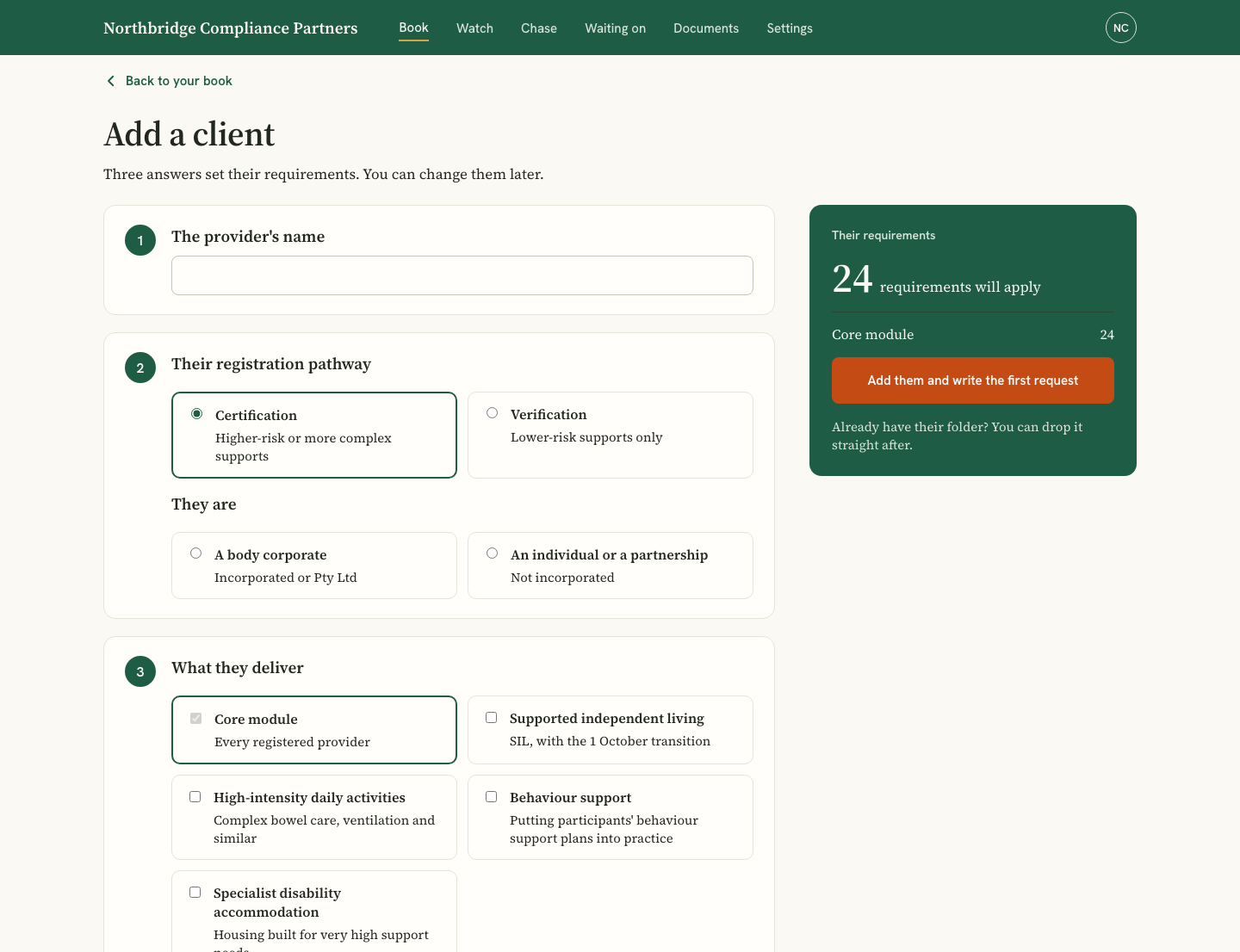
Choose the provider's pathway and registration groups. AuditFit lists exactly the requirements they will be audited on and writes your first request, with a checklist to attach.
- Only what this provider is audited on
- A first request in your name, PDF or Word
Drop their folder
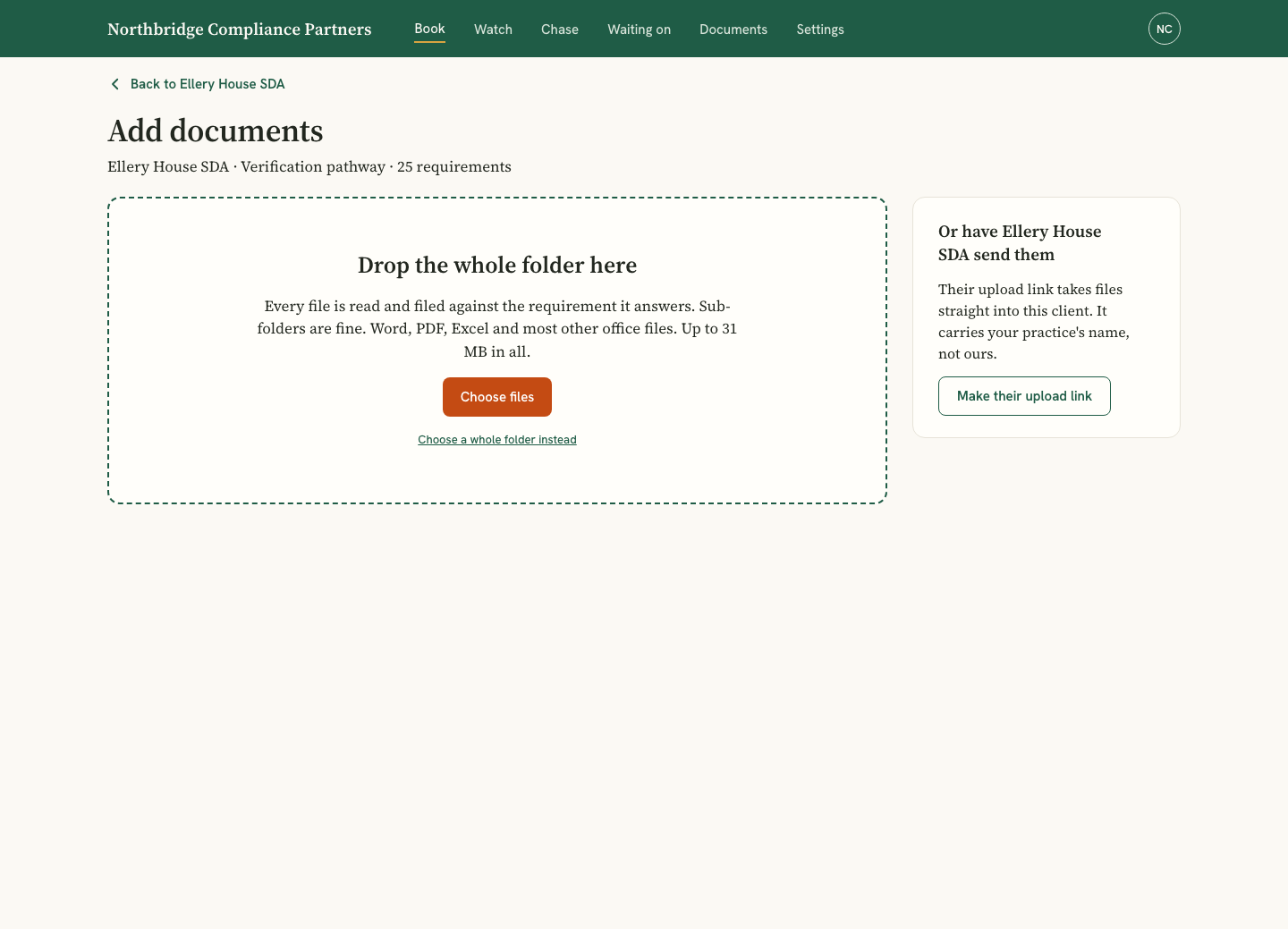
Drag in the whole folder: Word, PDF, Excel, PowerPoint, scans and saved web pages. Every file is read against every requirement, and any it cannot open is named.
- A progress bar while it reads
- Read and held in Australia
Review each requirement
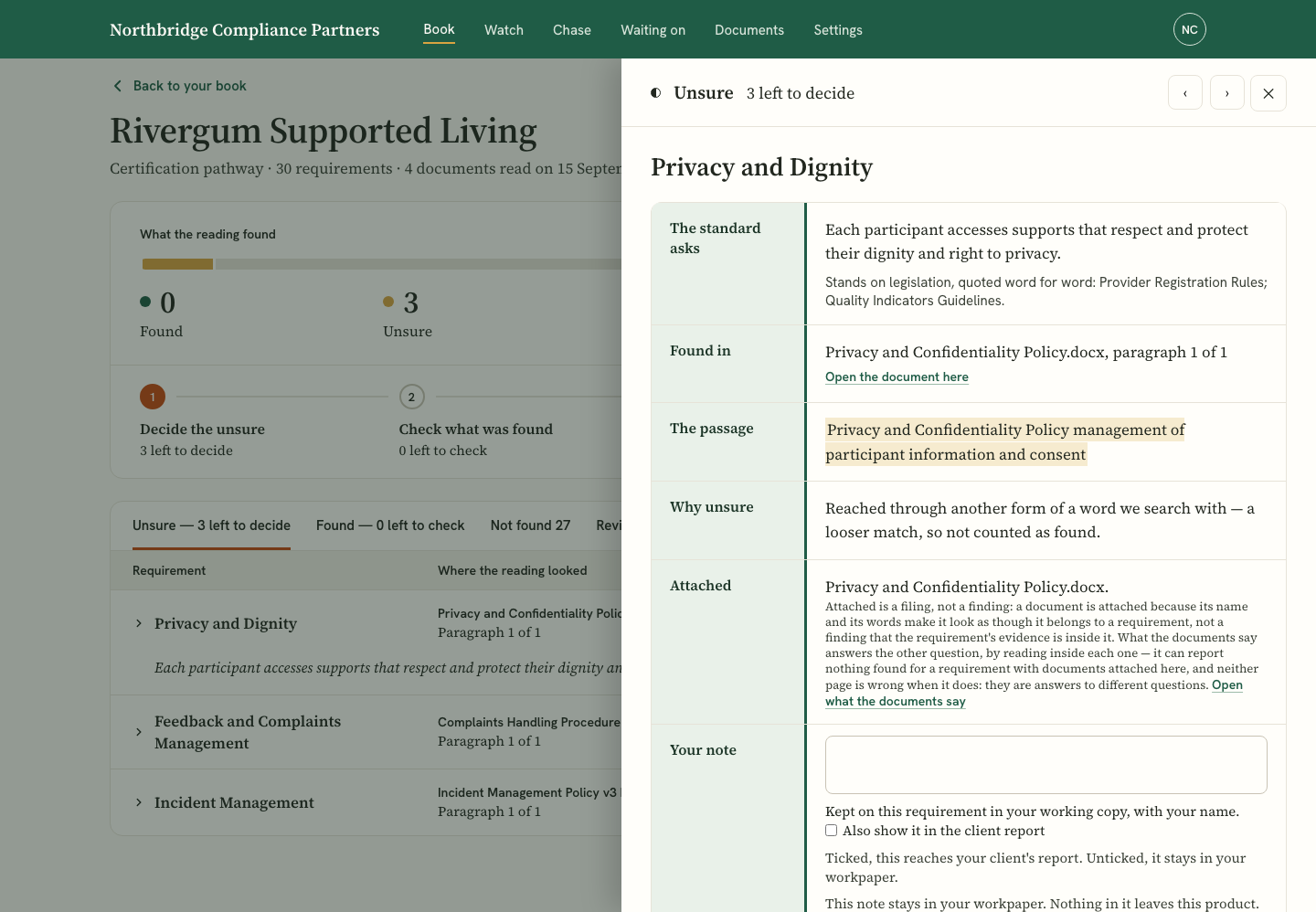
Each line says Found, Unsure or Not found. Found opens the document at the passage; Unsure says why. You confirm, reject or add a note.
- Every decision shows who made it and when
- Anything you reject joins the chase
Chase what is missing
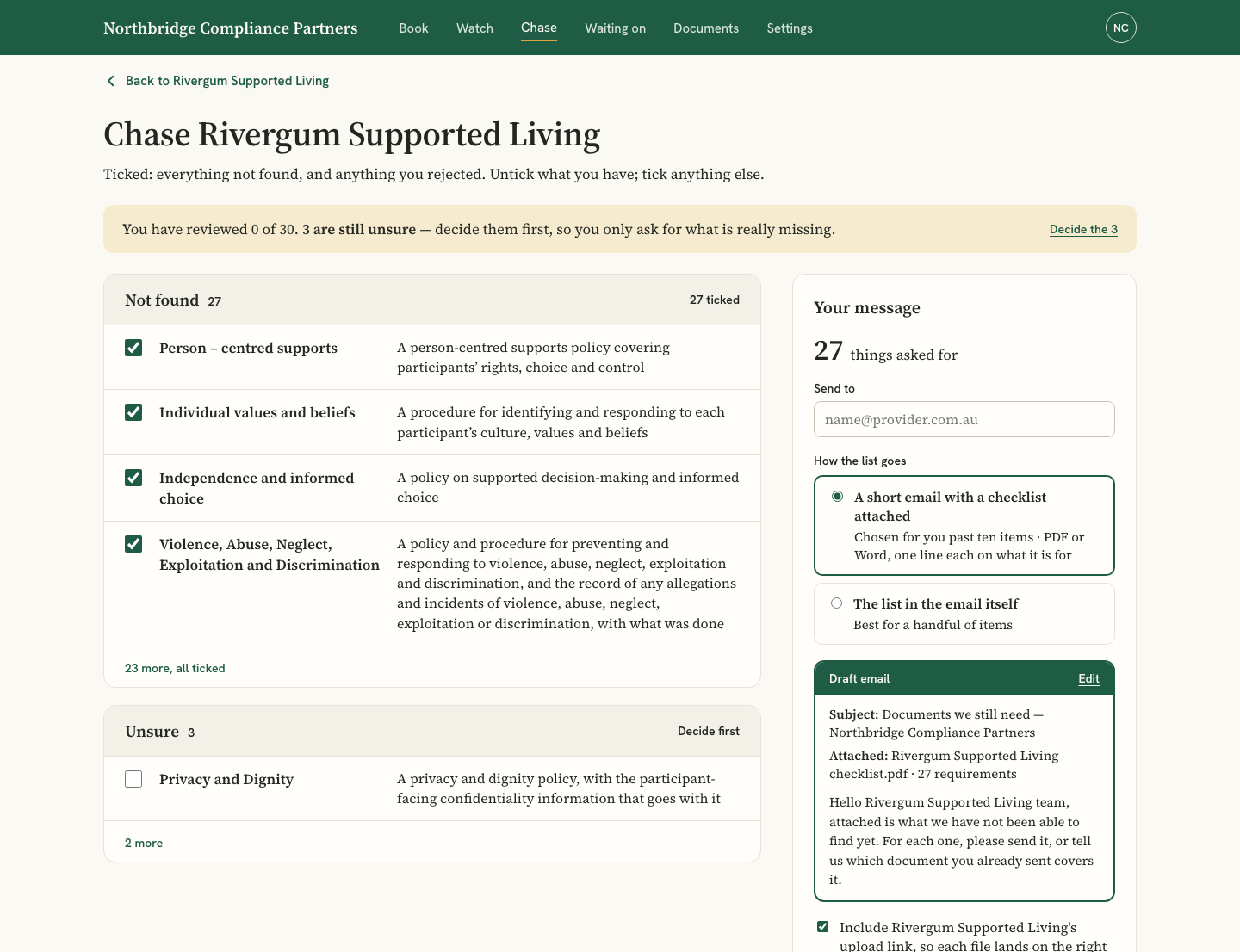
One email per client, drafted from the lines still open, with the checklist attached and an upload link. It opens in your own mail and goes from you.
- Returns land on the right client and line
- Each return is read against what you asked for
Hand over the report
A client report under your mark, name and colour, built only from your decisions, in PDF and Word. It ends with the documents still needed.
- It cannot be sent before you review it
- Watch then keeps review dates and rule changes in view
Northbank AdvisoryRegistration and audit consultants
Registration readiness report
Prepared for Bright Futures Supported Living Pty Ltd (a fictional provider) · 30 requirements
10
requirements evidenced
20
requirements still needed
- 1.1 Each participant accesses supports that promote, uphold and respect their legal and human rights and is enabled to exercise informed choice and control. The provision of supports promotes, upholds and respects individual rights to freedom of expression, self-determination and decision-making. — still needed
- 1.5 Each participant accesses supports free from violence, abuse, neglect, exploitation or discrimination. — held in Preventing Violence Abuse Neglect and Exploitation Policy.docx, paragraph 5
- 2.4 Management of each participant’s information ensures that it is identifiable, accurately recorded, current and confidential. Each participant’s information is easily accessible to the participant and appropriately utilised by relevant workers. — held in Privacy Dignity and Information Management Policy.docx, paragraph 5
Names of standards, outcomes and requirements on this page are reproduced exactly as they are published, including any unusual spacing or capitalisation. That is deliberate: it means you can search the official document for what you see here and find it, word for word.